SwiftChat · ConveGenius

Unlocking the ‘Aha!’ moment: boosting engagement and retention in SwiftChat.

Thousands installed SwiftChat every month, then left within days. I designed a guided first bot conversation that lifted D15 retention by 66%.

Android app and PWA. Design, Product Management and Growth teams.

one nudge, at the right moment ↓
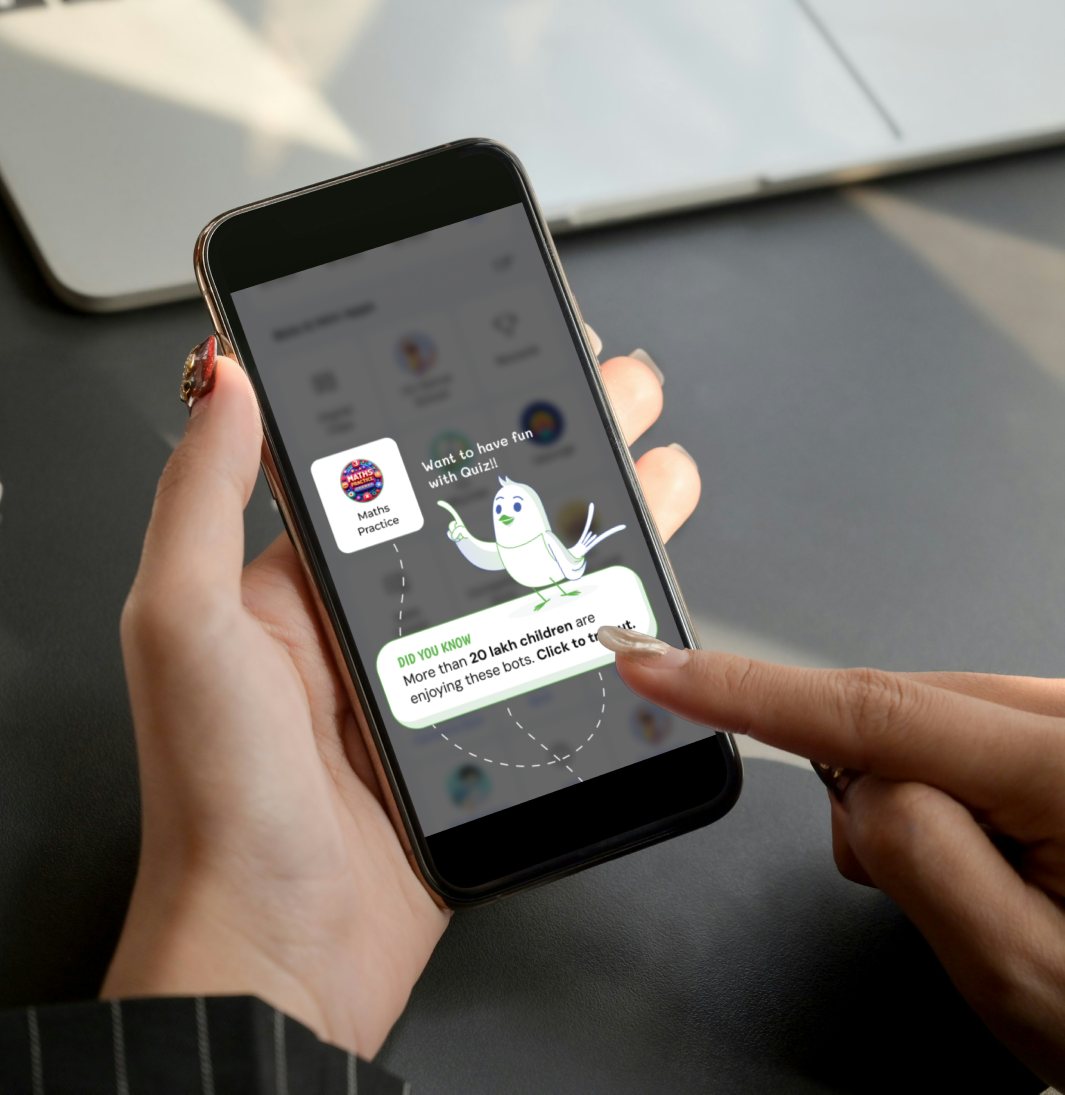
A student taps the guided popup on SwiftChat: a mascot bird points to Maths Practice with the line, more than 20 lakh children are enjoying these bots.

In short

The problem

Despite thousands of installs each month, many users dropped off after onboarding without engaging further. This directly impacted retention.

What I designed

A contextual guided conversation in place of the old app tour, shown as a popup the first time someone lands on Discover.

What changed

D7 retention up 33%, D15 up 66% and M1 up 25% against a control group that never saw the message.

The problem: users were leaving too soon

SwiftChat is an AI-powered edtech platform. We envisioned an interactive space where students could learn through AI-driven conversations, quizzes, and challenges.

But something was off. Users were leaving too soon. So we took a deep dive into our user data and found some alarming patterns.

A majority of users abandoned the app within their first 72 hours, leading to a sharp decline in retention and engagement.

Understanding the user

To validate our assumptions, we spoke to students in classrooms and at home to understand their frustrations.

What users told us

“I installed the app but didn’t know what to do next.”

“I looked around a bit, but nothing felt interesting.”

“I didn’t see a reason to start chatting with the bot right away.”

01 · Too many options

Users were unsure what to do after onboarding, as soon as they landed on the Discover page.

02 · Low awareness of features

Many users didn’t explore quizzes and challenges because they weren’t aware of the variety of features.

03 · No urgency to interact

Users did not feel a strong motivation to start conversations with the bot.

Finding the root cause

Before UX, I was a dentist. One habit stayed with me: don’t treat the symptom. So we looked for the single behaviour that separated users who stayed from users who left.

That set the brief. Not a better tour of every feature. A guided nudge towards one first conversation, in a way that felt natural and exciting.

  1. What we saw

    24.16% of new users quit within three days.

  2. Why?

    They landed on Discover, saw too many options, and nothing told them where to start.

  3. What the data showed

    Users who had a bot conversation within the first 3 days were 2.5 times more likely to stay until the end of the month.

  4. Hypothesis

    Users will be more engaged if they are introduced to fun, interactive elements as soon as they onboard.

How might we get new users talking to a bot right after onboarding?

Key screens

From a passive tour to one well-timed conversation. Tested against a control group that didn’t see the message.

Before · App tour

A tour points at things. It doesn’t give a reason.

The previous onboarding walked users through the Bot Store in four steps: bots you might like, finding bots, filters and sorting. Useful, but it asked nothing of them.

four screens, zero reasons to chat
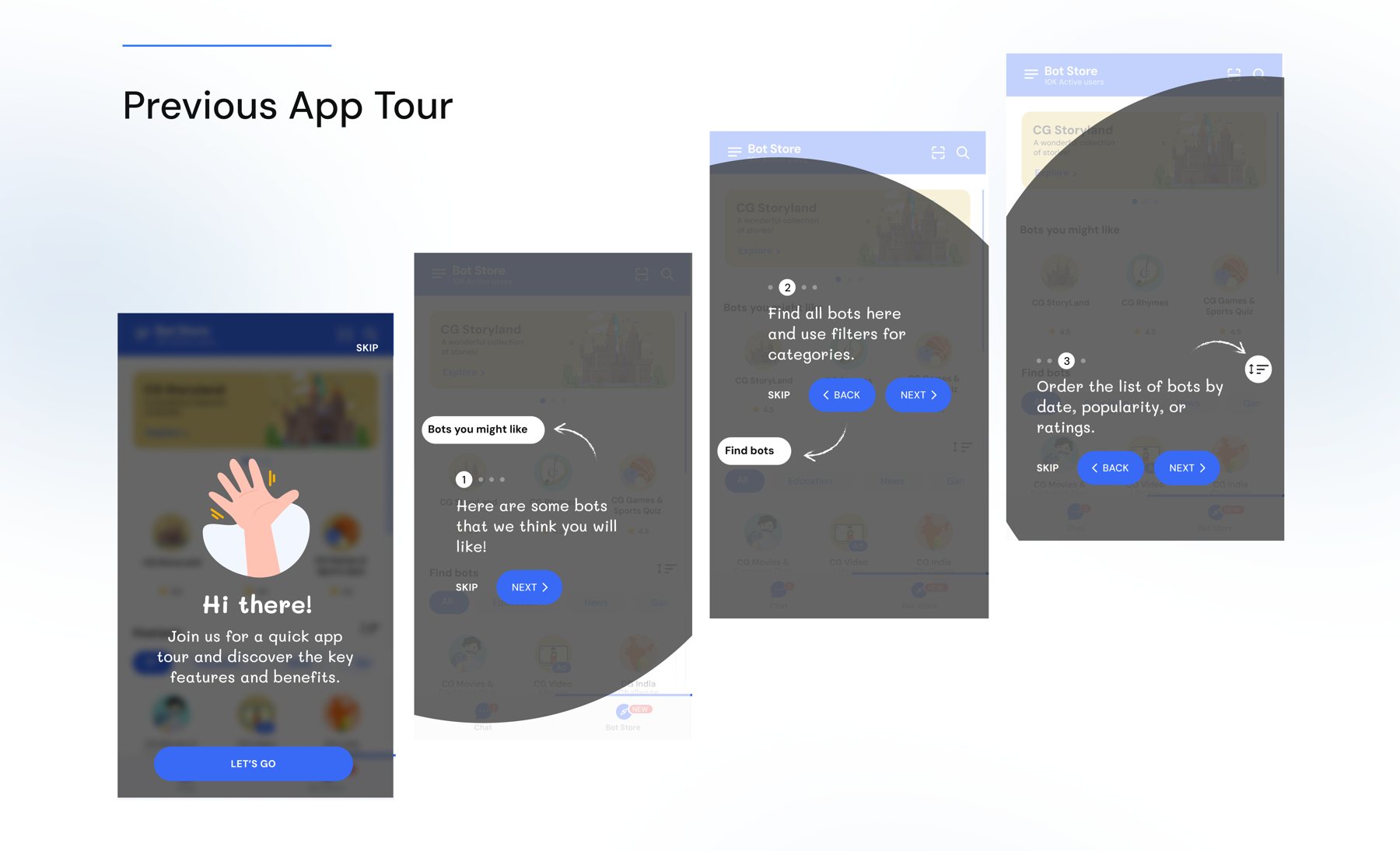
The previous four-step Bot Store app tour: a welcome screen, then bots you might like, find bots with filters, and sorting by date, popularity or ratings.
Before. The four-step Bot Store tour most users skipped.
Tested variants

Same popup, two reasons to tap.

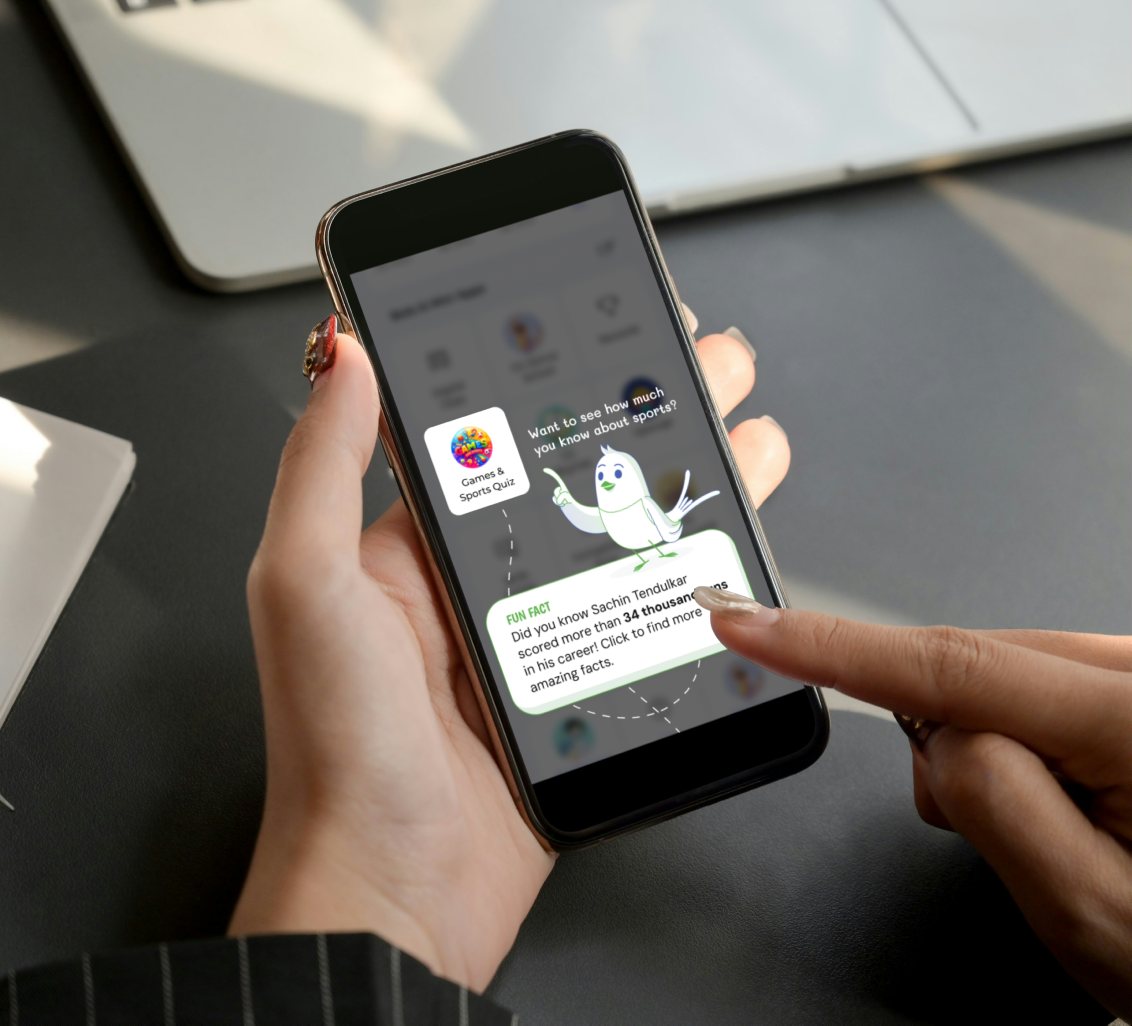
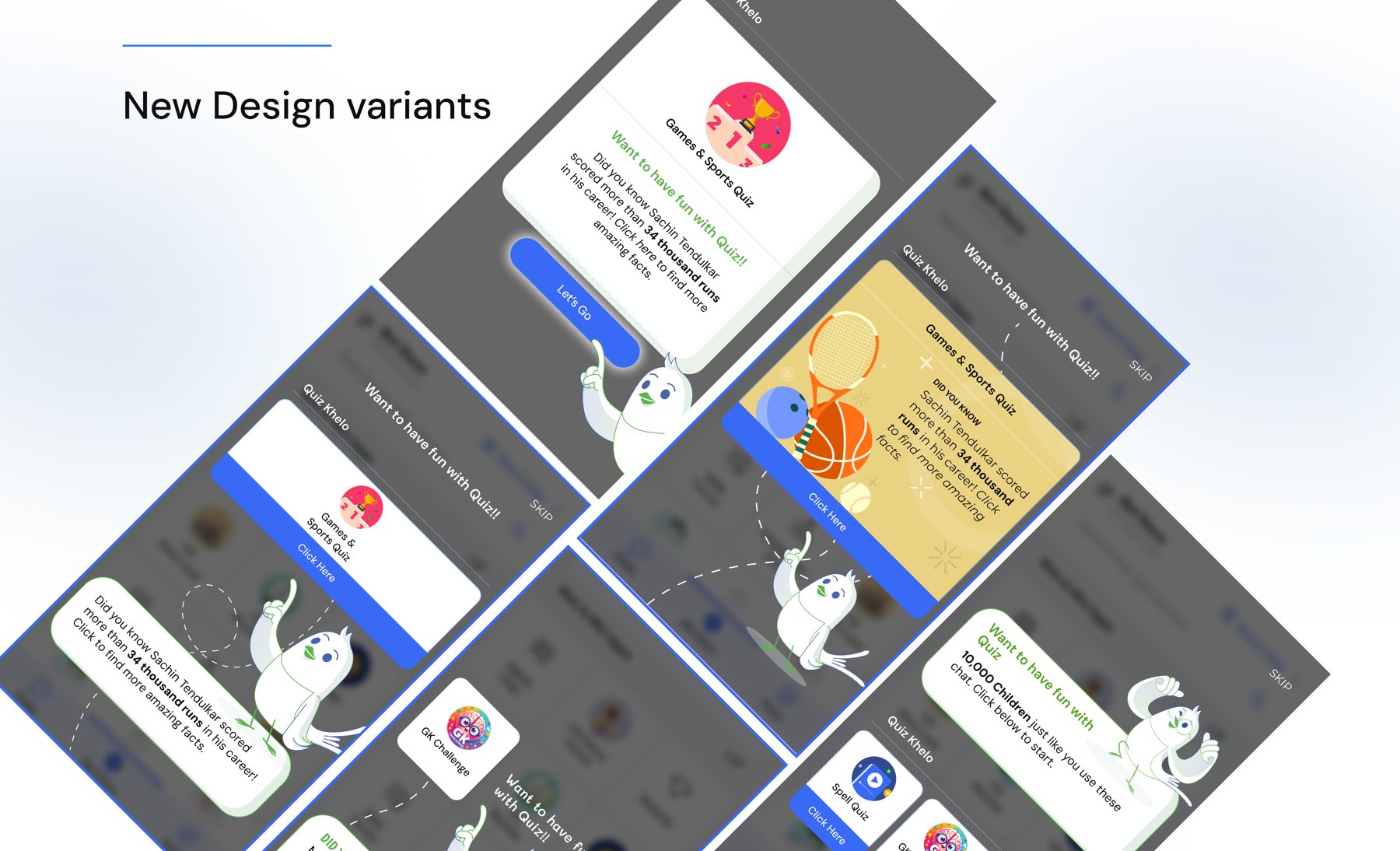
We tested 2 variations of the design: one with fact-based messaging and one with FOMO-based messaging.

FOMO won
Variant 1 on a phone: a fun fact about Sachin Tendulkar scoring more than 34 thousand runs, leading into the Games and Sports Quiz.
Variant 1. Fact-based messaging. “Did you know Sachin Tendulkar scored more than 34 thousand runs in his career?”
Variant 2 on a phone: more than 20 lakh children are enjoying these bots, click to try it out, leading into Maths Practice.
Variant 2. FOMO-based messaging. “More than 20 lakh children are enjoying these bots.”

Did it work

Measured against the control group that didn’t receive the in-app message.

+33%
D7 retention

For users who received the guided tour.

+66%
D15 retention

For users who received the in-app message.

+25%
M1 retention

Uplift for users who received the in-app message.

what won

FOMO-based messaging was highly effective in driving engagement. Timely nudges helped users take action immediately instead of passively exploring.

A small change, a big impact

What went well, and the one thing I’d carry into any onboarding.

Nudges beat tours

Replacing a passive onboarding with a guided conversation increased retention and encouraged meaningful interactions.

Test, then trust

A data-driven approach with a control group let us measure success and iterate quickly.

Small, strategic changes

This experiment proved that small, well-placed nudges can have a big impact on retention.

What I learned

It’s not just about getting users to sign up. It’s about making them stay, and that starts with engaging them from day one.

Want to see the full experiment, or talk through the variants? I’d be glad to walk you through it.

Emailasharvani0@gmail.com
Go to LinkedIn ↗